

Lamington
A deep(ish) dive into one of Australia's most iconic desserts

Hello! Today we’re heading Down Under in search of sunnier climates and one of my favourite snacking cakes. Unfortunately I’m not actually going to Australia, instead I’m stuck in freezing cold northern England but this hasn’t stopped me from getting fully in the zone and going lamington crazy.
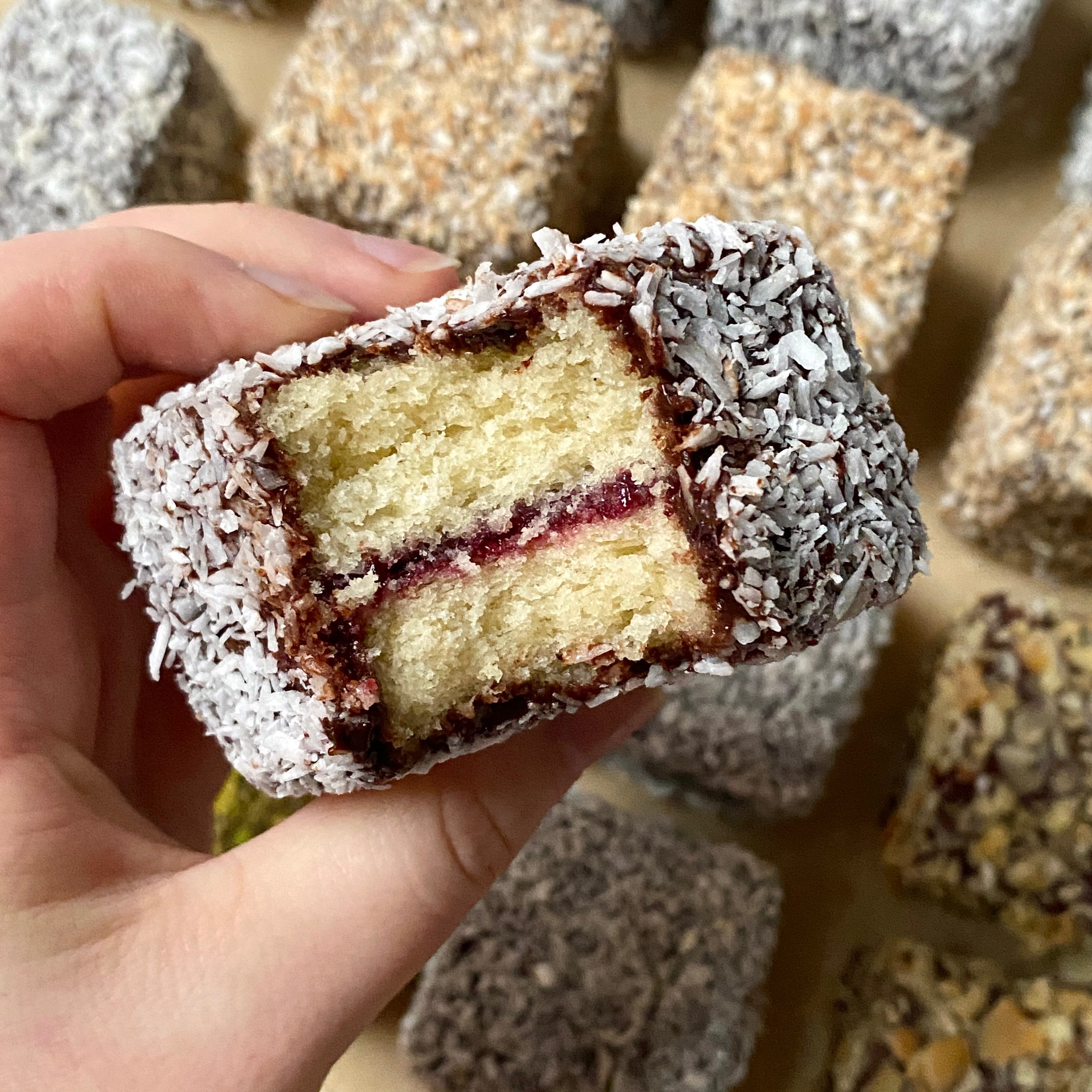
I’ve never actually been to Australia but I’ve been to the next best thing - Clapham, an area of London so full of Aussies that you can barely tell the difference. It was here that I had my first ever lamington and fell in love. Lamingtons are my exact kind of cake, simple but delicious, a cake you’d expect to find at a bake sale or in your lunchbox and even though I didn’t try one until my mid-twenties they’re somehow nostalgic.
So what is a lamington?
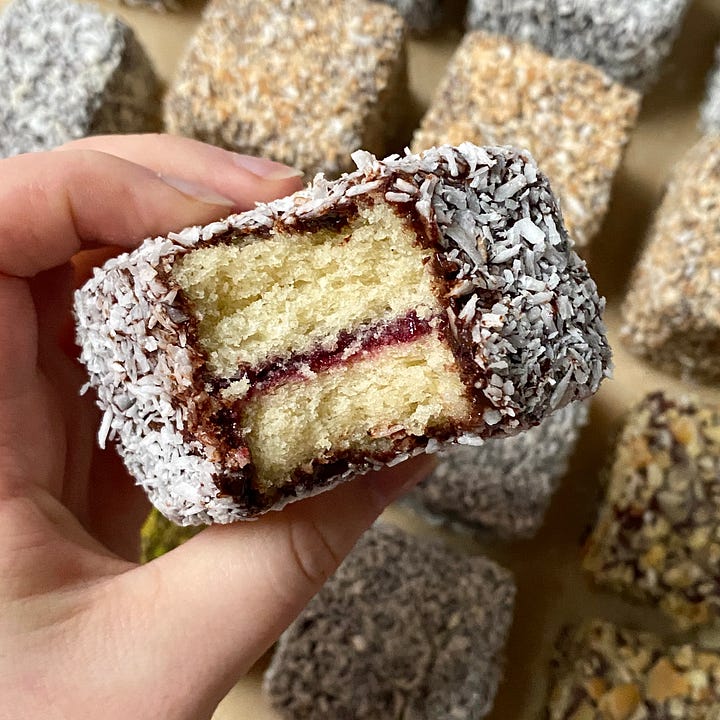
Lamingtons are small, square cakes which are dipped in chocolate icing and rolled in desiccated coconut. I’ve come across a few different versions of the origin story but it’s generally believed that they were invented in the late 1800s by French Chef Armand Galland who was working for Lord Lamington, the Governor of Queensland. The story goes that guests arrived unexpectedly at Government House and with no other tea time treats ready, Galland rushed to make something out of whatever he had lying around which happened to be day old cake and chocolate icing, in an attempt to neaten the cakes up, he tossed them in desiccated coconut and the lamington was born.
Another account suggests that the cake was dropped into chocolate icing by accident and in an attempt to fix the mistake, Galland covered the cakes in coconut. Personally, I prefer this version of events, I know all too well the panic that a mistake like this would cause in a busy kitchen, sticky chocolate icing all over the place is no joke. I like the idea of such an iconic cake being born from a messy mistake.
The Components
Let’s have a look at the components:
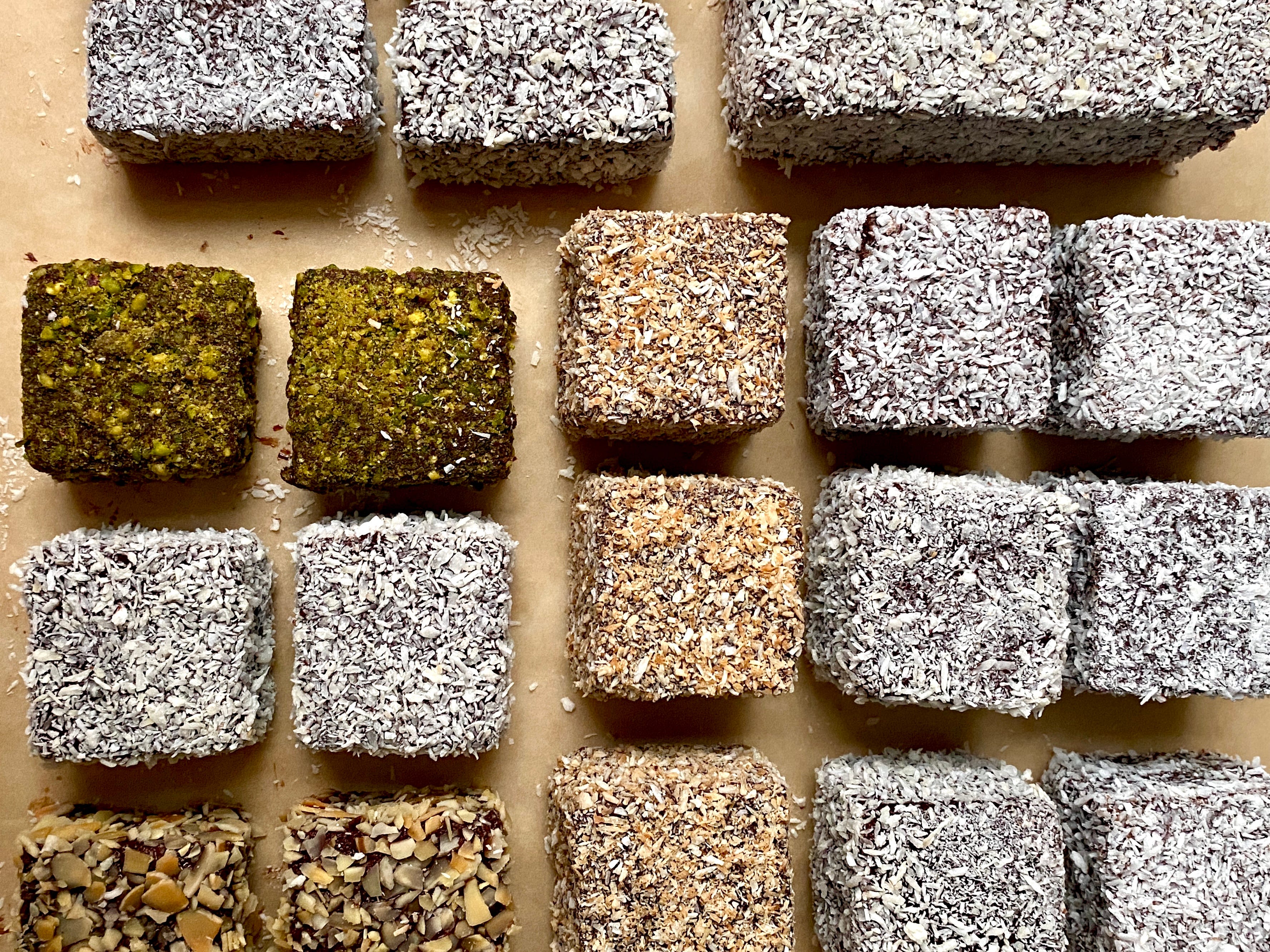
The Cake - Most recipes for lamington call for a butter-based sponge cake, I’ve encountered a few that use whipped egg sponges like genoise but I prefer something a bit more sturdy. When I first started recipe testing for the lamington, I tested with a few different sponges before realising that I’d already done a tonne of recipe development to find my ideal sponge so why was I wasting my time!? The only change I made to my vanilla sponge recipe was to drop the baking powder slightly as I find that when it’s baked in a large square tin, it struggles to hold as much air and can be prone to collapsing slightly. If you have a favourite butter-based sponge recipe, feel free to use that instead!
Fillings - Traditionally lamingtons don’t contain any fillings at all but if I have the opportunity to add jam to something, you better believe I’m going to take it. I like a tangy jam to counteract some of the sweetness from the icing so I used my mixed berry jam but raspberry also works well here. If you’re a purist just leave it out. I also experimented with both cream and buttercream fillings but I found that they interfered with the texture and made the lamingtons difficult to eat, part of the joy of a lamington is that you can pick it up with your fingers and shove it in your gob and I don’t want anything to interfere with that.
Chocolate Icing - This was the component that required most testing for me. Traditional recipes call for a simple mixture of icing sugar, cocoa powder which is delicious but in a lot of cases, a little too sweet. I tested with ganache as well as chocolate sauce, the ganache tasted great but was quite thick which made it tricky to work with and the chocolate sauce didn’t quite crust over the way that I wanted meaning that the lamingtons were quite sticky to handle, even after being left to set. In the end I settled on chocolate icing with the addition of some 70% dark chocolate and coconut oil which both helps the icing to set and makes it extra tasty!
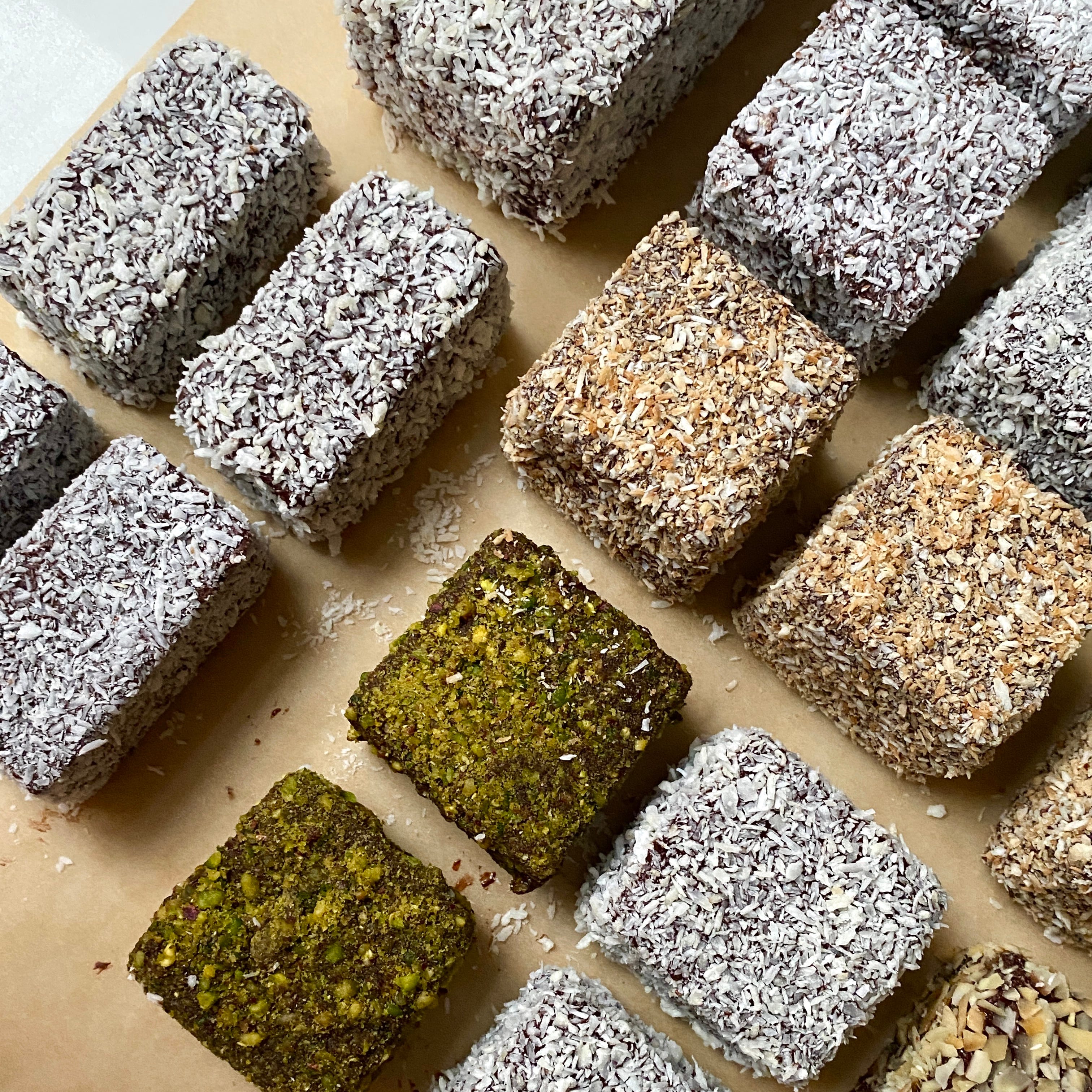
The Coconut - I really don’t think you need to be too fussy when it comes to the coconut, I used standard desiccated coconut that I got from the baking aisle in the supermarket and it worked great, I also tested using some fine desiccated coconut but I liked the chew of the standard supermarket stuff better. I used toasted coconut for a few of my tests, this, of course, added a lovely toasty flavour but I think in this scenario I prefer the simplicity of un-toasted. You can also get crazy and toss the lamingtons in chopped nuts or seeds, I’m not sure how I feel about this, is it even a lamington if there’s no coconut involved? I’ll let you be the judge.
The Method
As I’ve already covered sponges extensively in my vanilla sponge deep dive, we’ll skip that part and get straight into the cutting and dipping.
Cutting & Freezing
Generally the advice for lamingtons is to cut the sponge into cubes, then either freeze or leave to go slightly stale and then dip. I want to keep my cake as moist as possible so I opt to freeze it rather than leaving it to go stale. Freezing not only makes the dipping process much easier but I like to go one step further and semi-freeze my sponge after sandwiching with jam but before cutting it into cubes. Freezing the sponge for an hour or so before cutting it into cubes gives you really nice sharp squares with minimal crumbs which is important later. I then freeze the sponge overnight in preparation for the next step - dipping!
Dipping
Dipping the lamingtons in chocolate icing without making a huge mess is probably the trickiest part of the process. I found that the best way was to work with completely frozen sponge, skewered on a fork and then dipped in icing. You can also just dunk the sponges using a gloved hand but I found that this made a bit more of a mess.
You can go straight from dipping to tossing the sponges in coconut but I found that , depending on the exact texture of my icing, it would sometimes run off my lamingtons so that they were left with an ooey gooey chocolatey skirt (see pic below), the best way I found to avoid this was to dip them, transfer them to a glazing rack, leave them for a minute or so and then transfer them to the coconut with a pallet knife.
The only problem with this method is that they can lose a little bit of the chocolate icing when you transfer them, if this happens, I just touch it up with a little extra icing and any messy areas are soon covered up with coconut anyway. I’ve included a tonne of GIFs in this post to demonstrate the techniques I used!


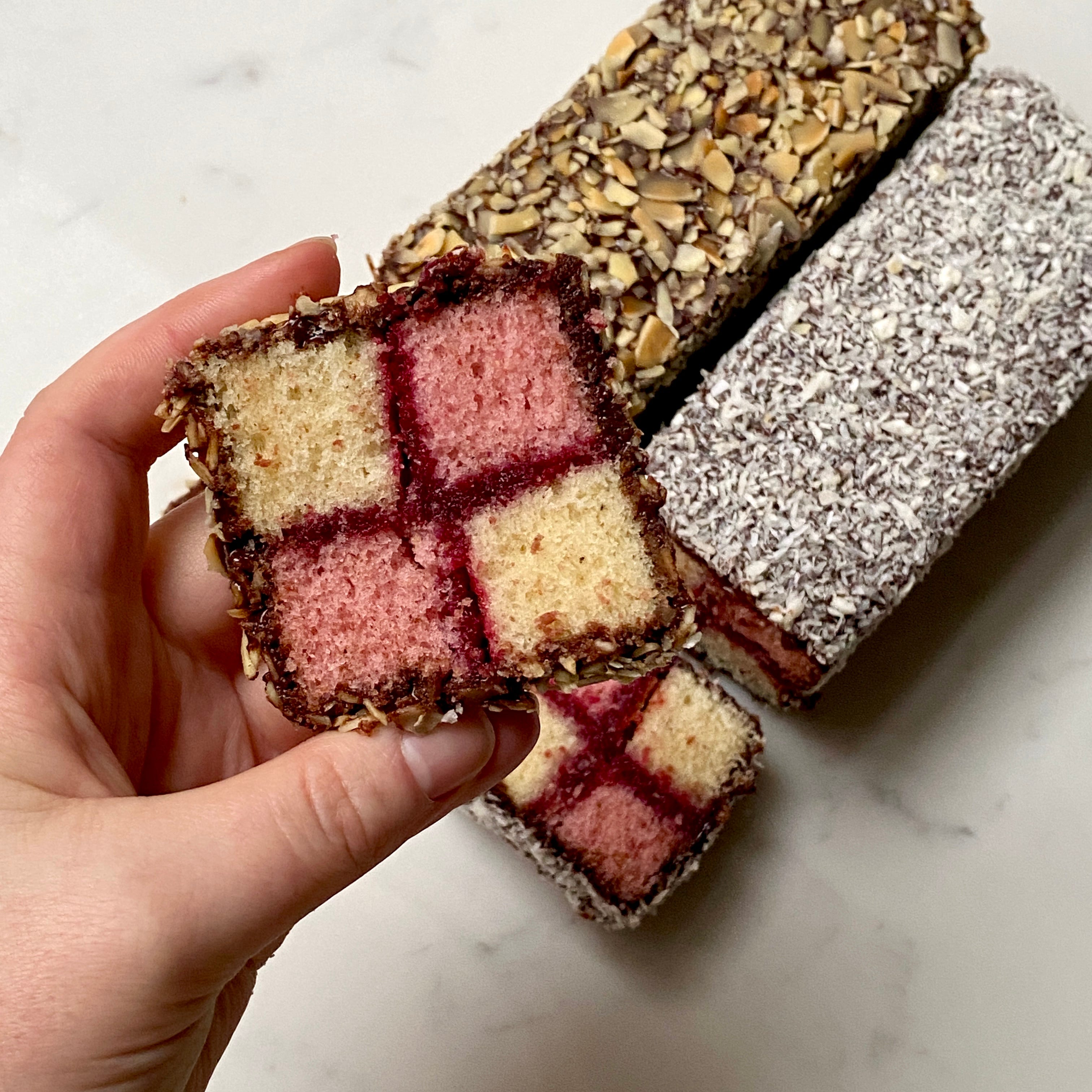
I’m keeping the lamingtons in this post fairly traditional, however, if you fancy something a little more experimental I am also sharing a recipe for a Lamington X Battenberg mash up, with a cardamom sponge and sour cherry jam, this recipe is exclusively for paid subscribers so if that sounds like something you fancy, please consider upgrading your subscription. You’ll receive an exclusive recipe every week, plus access to the full archive of over 200 thoroughly tested cake and dessert recipes. And you'll be helping support me so I can continue creating and sharing recipes! 🩷
Let’s get into the recipe…
Lamingtons
Equipment - 23cm (9”) square tin, bread knife, pallet knife, ruler, wire rack.
Ingredients - Makes 16
Sponge
115g very soft butter
270g caster sugar
270g plain flour
15g cornflour (corn starch)
12g baking powder
0.25 tsp fine salt
1 tbsp vanilla extract
187g egg
33g neutral oil
142g milk
Chocolate Icing
250g icing sugar
50g cocoa powder
Pinch of salt
140g whole milk (plus a little extra)
100g 70% chocolate
40g coconut oil
To Assemble
100g jam
300g desiccated coconut
Method - Sponge
Preheat the oven to 150°C fan and grease and line your tin.
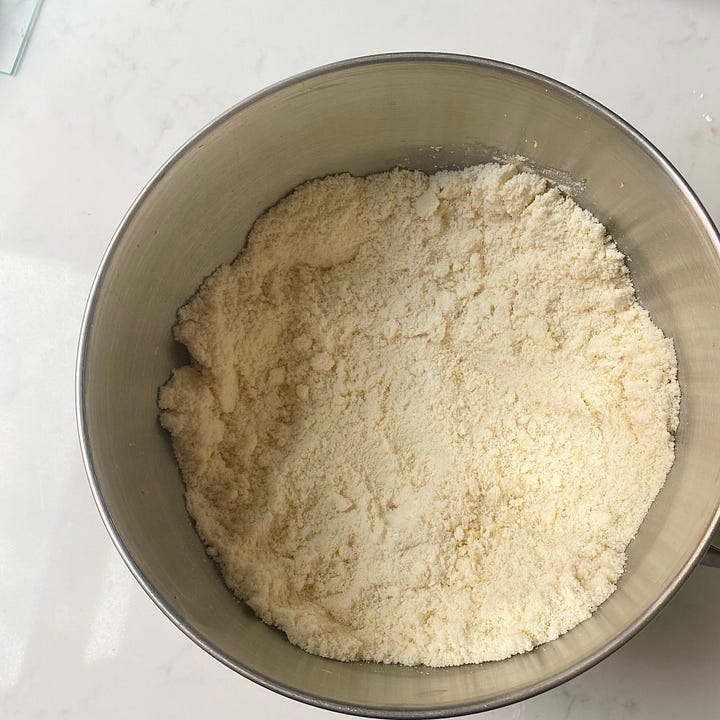
Combine all of the dry ingredients with the soft butter (it’s important that the butter is very soft!) and mix until the butter is fully incorporated and there are no lumps, the mixture should have the texture of breadcrumbs.
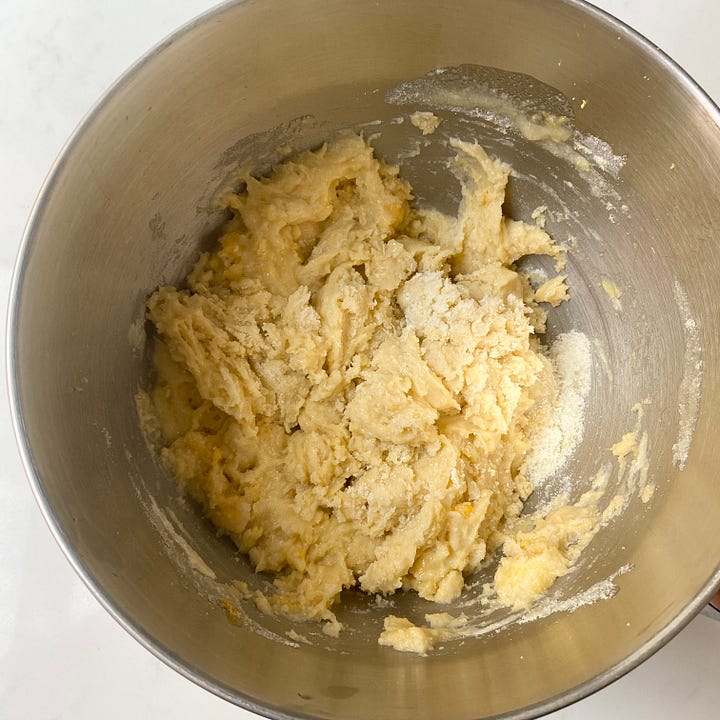
Add the egg, oil and vanilla and mix very briefly until just coming together.
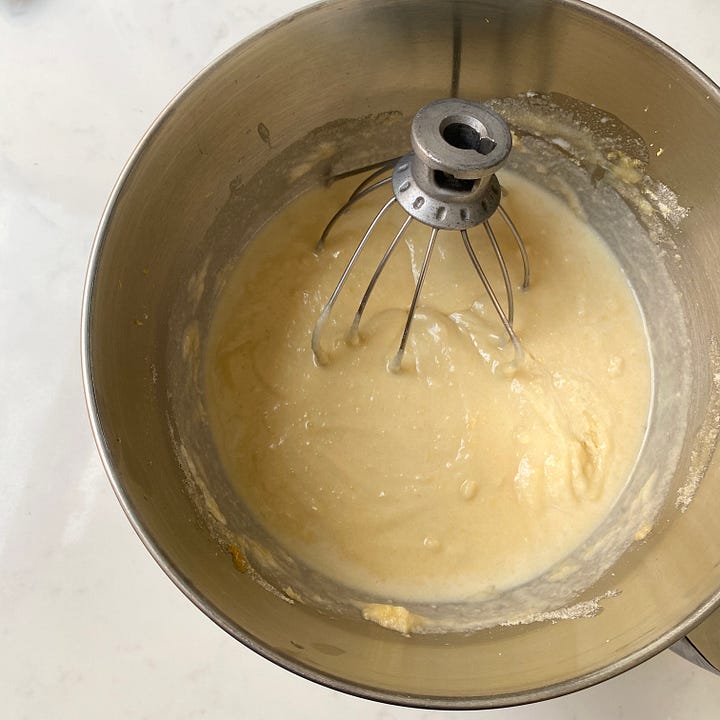
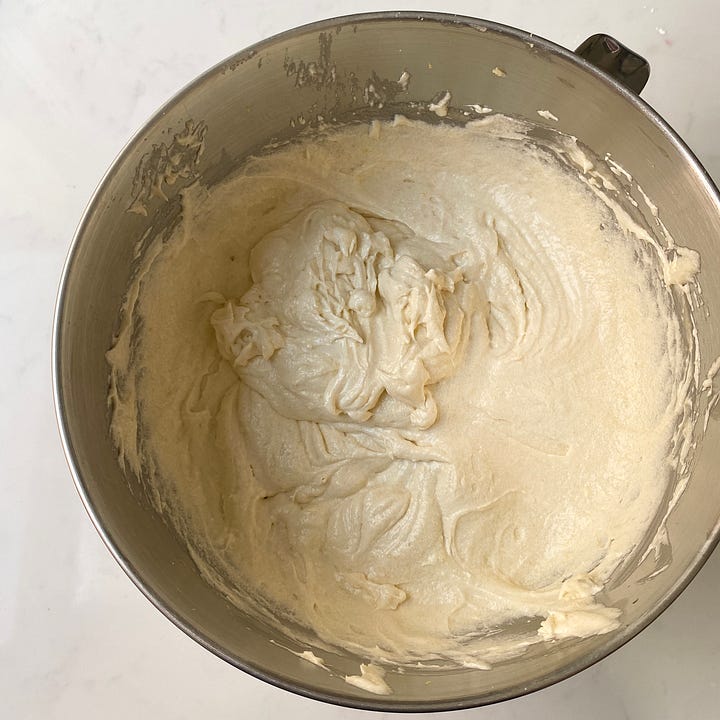
Add the milk, if using a stand mixer, switch to the whisk attachment and mix on slow until the milk is incorporated then turn the speed up to medium-high and whisk for 2-3 minutes until it becomes pale, fluffy and thick, as soon as it gets thick, stop whisking, any whisking after the original thickening will overwork the gluten and knock air out. The mixture might look slightly split, don’t worry, this isn’t a problem.
Pour into the tin and bake for 55-70 minutes until the sponge bounces back when pressed, a skewer comes out clean and it starts to pull away from the sides of the tin. This sponge tends to puff up a lot and then deflate a little bit once it comes out of the oven, don’t panic if this happens.
Set aside to cool.
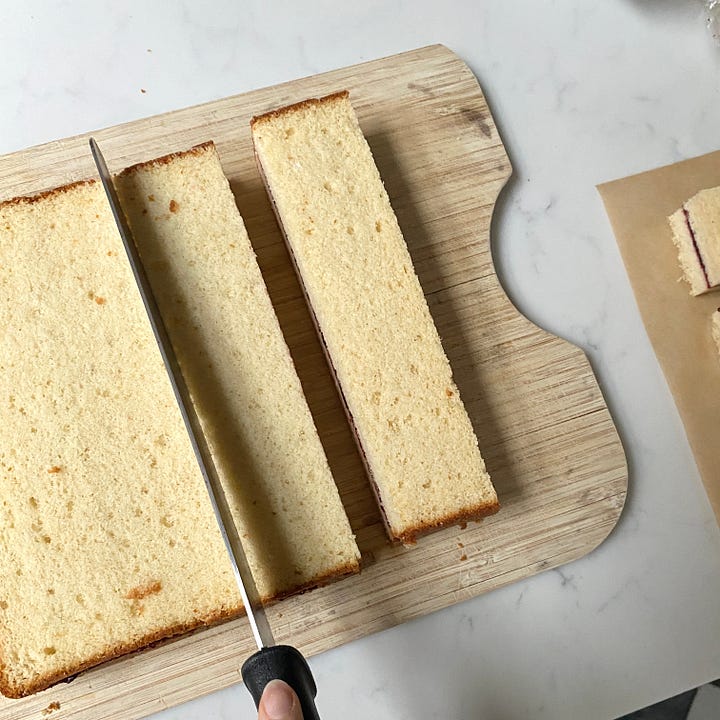
Once the sponge is cool, trim the top and cut it in half.
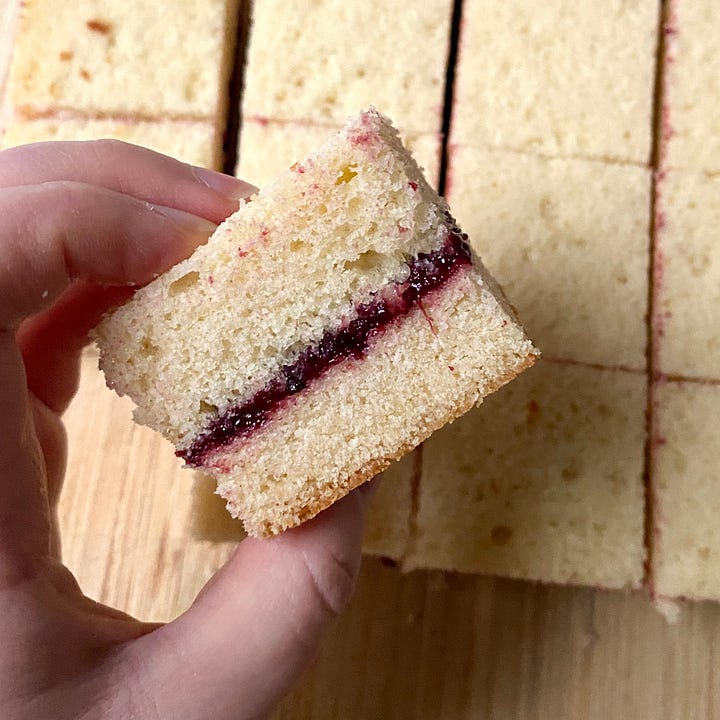
Fill with 100g of jam, sandwich and then chill in the fridge or freezer for an hour before cutting into squares.
Trim the edges and then cut into 5cm x 5cm squares.
Put in an airtight container or wrap in clingfilm and freeze overnight.


Method - Icing & Dipping
To make the chocolate icing, sieve the cocoa powder, icing sugar and salt together into a large bowl and set aside.
Boil the milk then remove from the heat and add the chocolate, whisk together until combined.
Add the coconut oil and mix until melted.
Pour the chocolate mixture into the icing sugar and cocoa and whisk until smooth.
The icing should be a pourable texture, if it’s a little stiff, warm it in the microwave for 30 seconds, you can also add 10-20g more milk if needed.
Set up your dipping station. You’ll need a fork (use a chocolate dipping fork if you have one), a pallet knife and the following set out in this order:
Frozen sponges - I pull out 4 at a time.
The bowl of chocolate icing.
A wire rack with a tray or baking paper underneath.
A large bowl filled with desiccated coconut.
A lined tray to put the finished lamingtons on.
Pull out 4 squares of sponge at a time and then dip into the icing making sure it’s completely covered. Lightly tap the fork on the side of the bowl to remove any excess and then transfer to the wire rack.
Pull out the fork and smooth out the top with a pallet knife. It doesn’t matter if they’re a little messy, the coconut hides a lot.


Leave the dipped lamingtons on the wire rack for 2-3 minutes before picking up with a pallet knife and transferring to the bowl of coconut. If you notice any areas of uncovered sponge, add a little icing using the pallet knife.
Toss in the coconut and then pick up from the bottom and set aside on the lined tray.
Leave the finished lamingtons to set for an hour before transferring to an airtight container.
Lamingtons will keep for up to 4 days in an airtight container at room temperature.



If you’ve never tried a lamington before I really hope this post encourages you to make some! I’ll see you next week for a Valentines special 💘.
These look so good. Love your Lamington x Battenberg too! Xx
Gorgeous!! Also - very cool use of gifs in a newsletter, those are super helpful here 😄